The Science of Menstrual Support
Research into cranial nerve function is reshaping how we understand menstrual physiology. By engaging neural pathways involved in autonomic regulation, transcutaneous auricular neurostimulation (tAN®) introduces a new way to support physiological balance during the menstrual cycle.
What Auricular Neurostimulation Does for the Nervous System
Research into cranial nerve function is reshaping how we understand menstrual physiology. By engaging neural pathways involved in autonomic regulation, transcutaneous auricular neurostimulation (tAN®) introduces a new way to support physiological balance during the menstrual cycle.
Modulation of Pain Signaling
By engaging trigeminal and vagal pathways, neurostimulation influences how sensory signals are processed. This supports how the body interprets sensations related to comfort and discomfort during menstruation.
Increased Parasympathetic Activity
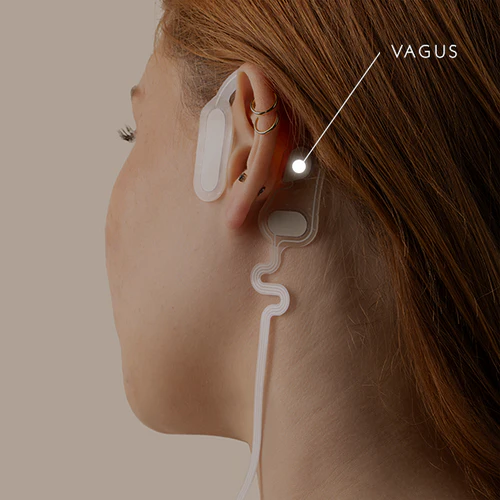
Auricular neurostimulation gently stimulates a branch of the vagus nerve through the ear, helping the body shift out of “stress mode” and into a more balanced, regulated state. During menstruation, this can support calmer physical responses, promote relaxation, and help the body feel more steady and at ease.
Changes in Organ-Level Signaling
Stimulation of both nerves strengthens communication between the brain and body. Supporting this coordination promotes more stable, whole-body regulation during the menstrual cycle.
Your menstrual cycle involves more than hormones
Your Nervous System Shapes Your Cycle
The menstrual cycle is closely connected to the autonomic nervous system, which helps regulate how your body responds to stress, rest, digestion, sleep, and emotional balance.⁸
Neurostimulation engages pathways involved in autonomic regulation. By stimulating external branches of the vagus and trigeminal nerves, it supports a shift away from elevated sympathetic activation and toward greater parasympathetic balance.²
This non-hormonal, non-pharmaceutical approach works with the nervous system to support the body’s natural regulatory processes during menstruation.

fight or flight
The Sympathetic State
Research into cranial nerve function is reshaping how we understand menstrual physiology. By engaging neural pathways involved in autonomic regulation, transcutaneous auricular neurostimulation (tAN®) introduces a new way to support physiological balance during the menstrual cycle.
rest and digest
The Parasympathetic State
Research into cranial nerve function is reshaping how we understand menstrual physiology. By engaging neural pathways involved in autonomic regulation, transcutaneous auricular neurostimulation (tAN®) introduces a new way to support physiological balance during the menstrual cycle.
The Vagus Nerve
The Wandering Nerve
The vagus nerve is one of twelve cranial nerves and the only one that extends beyond the head to connect with major organ systems throughout the body, including the heart, lungs, and spleen.
As a key part of the autonomic nervous system, it helps regulate digestion, sleep and energy, mood, and overall balance between stress and recovery. Because it connects to organs involved in blood-related processes, including the spleen, it is especially relevant in understanding menstrual health.
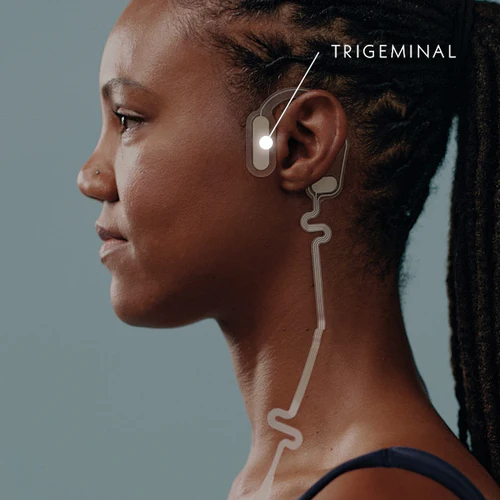
The Trigeminal Nerve
The Sensory Pathway
The trigeminal nerve is one of the primary sensory nerves of the head and face. It plays a central role in how the brain interprets physical sensations, including signals related to comfort and discomfort.
Trigeminal pathways also connect to brain regions involved in neurochemical signaling, the brain’s internal messaging system. These pathways influence naturally occurring compounds such as endorphins (i.e. body’s natural pain killers) and other regulatory messengers, helping explain their relevance to comfort and overall well-being during the menstrual cycle.